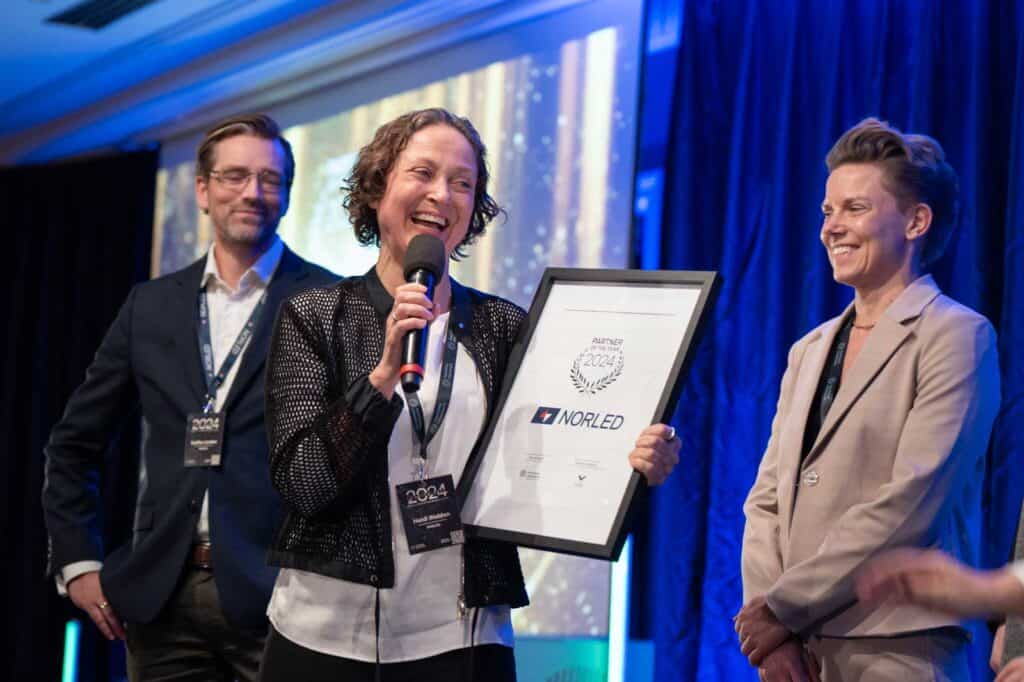
GRESB is an internationally recognized assessment that measures companies’ work with environmental, social, and corporate governance (ESG). The result is an important mark of quality regarding how companies manage, monitor, and report their sustainability efforts.
“The result shows that Norled has good management of our sustainability work and high quality in our reporting. We have good control over our data and can report on everything from climate accounts to governing documents and policies,” says Sustainability Manager Julie Eliassen.
Long-term efforts yield results
Norled has achieved high results in the GRESB assessment over several years. To further improve results, the company has, among other things, updated several policies during 2026. “There is great willingness within the organization to contribute to the sustainability reporting work. Many departments contribute data, documentation, and professional assessments that enable us to deliver high-quality reporting,” says Eliassen.
To increase efficiency, a dedicated Power BI solution has also been developed, providing a quick and clear overview of key sustainability data.
“The digital solution makes it much easier to monitor and analyze developments in key areas. The Digital department has done a very important job here. In addition, we have close and effective cooperation with the QHSE environment, which contributes valuable expertise and insight,” she says.
Good control over energy consumption
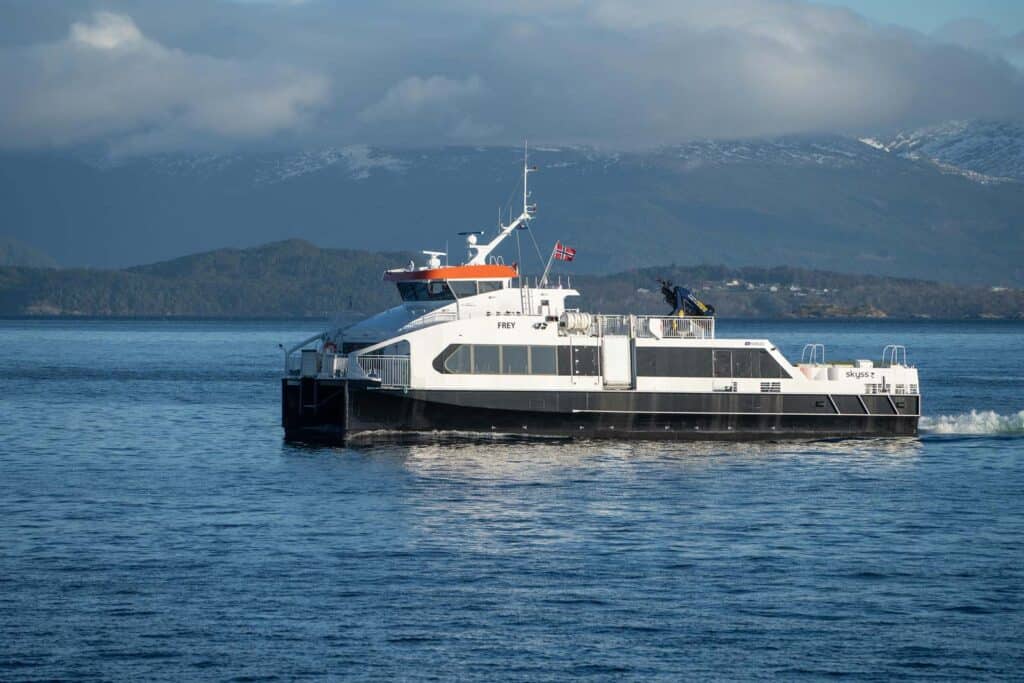
One of the areas where Norled has a particularly good overview is the fleet’s energy consumption. The company can track energy use down to the individual vessel level.
Important for owners and the company
Norled’s owner, CBRE Investment Management, has a strong focus on sustainability and actively uses ESG results in the monitoring and management of the companies in its portfolio.
GRESB reporting is therefore not only a measure of performance but also an important tool for understanding risks and opportunities.
“Sustainability reporting provides us with a solid foundation for risk management. It helps us identify and manage risks related to, among other things, climate change, regulatory requirements, safety, and expectations from customers, owners, and society. This makes us better equipped to make sound decisions and ensure a robust and sustainable business in the long term,” says Eliassen.
She also points out that sustainability reporting has evolved into an important management tool for the business. “A good overview of data, performance, and risk provides us with an important basis for decision-making when we consider changes in operations.”